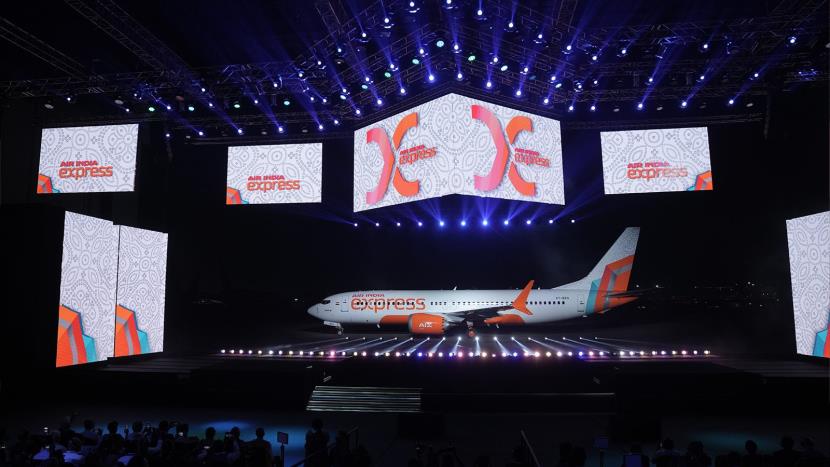
When the Tata Group reacquired Air India in January 2022, it marked the beginning of an ambitious transformation journey across the skies. Managing a global footprint with over a million employees across 100 countries, the conglomerate set out to revitalize the airline’s identity. In a magnificent continuation of the legacy of Air India Express (AIX), the airline unveiled a striking brand identity centered around the theme #TalesOfIndia or the “Patterns of India”
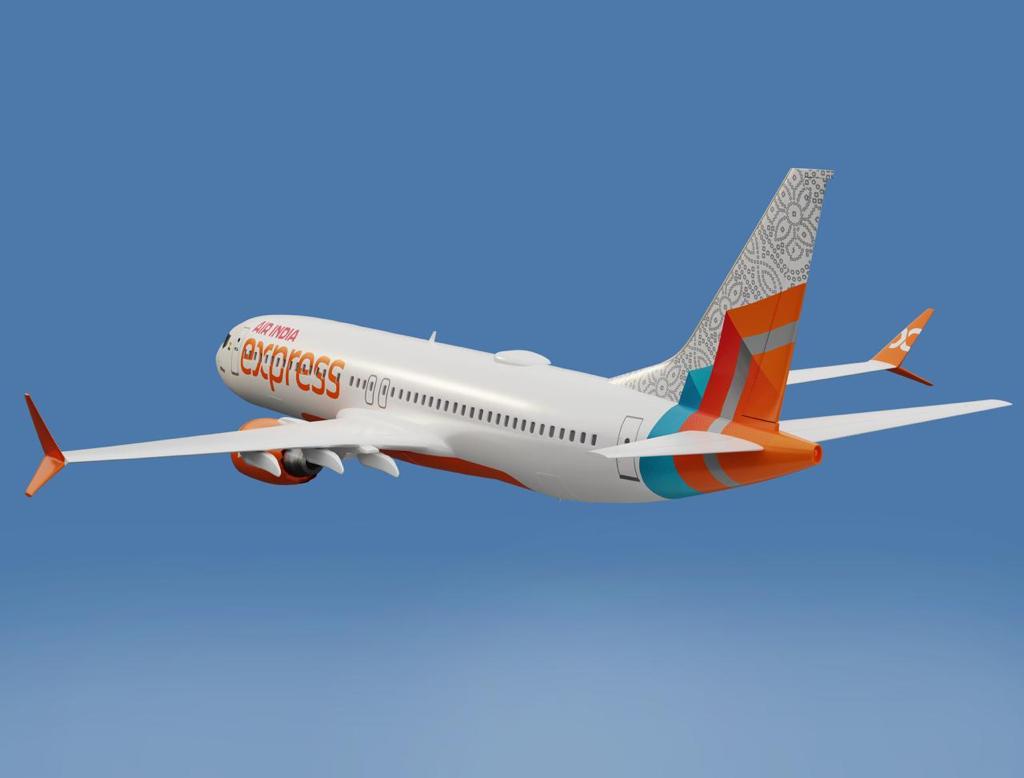
Moving forward from the classic era—where aircraft featured a predominantly white fuselage with completely different historical monuments painted on either side of the tail—the modern fleet acts as a unified flying museum of national heritage. Sporting a premium palette of Express Orange and Express Turquoise, each newly inducted aircraft carries an identical, beautifully mirrored design on both sides of its tail fin, celebrating traditional textiles, handlooms, and folk art forms from various Indian states.
Whether you are an aviation spotter, a travel enthusiast, or a lover of Indian heritage, here is the complete, comprehensive master list of all the Air India Express tail designs introduced in the Tata era.
Explore the vibrancy of Indian art and design over the centuries with #TalesOfIndia!
Let’s checkout all tail arts of Air India Express aircrafts and understand what it means according to airline. If you love this article, please do share on your social media account and leave comment for any suggestions or addition. The Live Time.
The ‘Fly As you Are’ motto is about enabling flyers to “personalise and take charge of their travel experience”
-Air India Express
Following is list of Air India Express Tail Design with Arts from Indian States.
1. Banarasi – Uttar Pradesh (VT-BXJ)
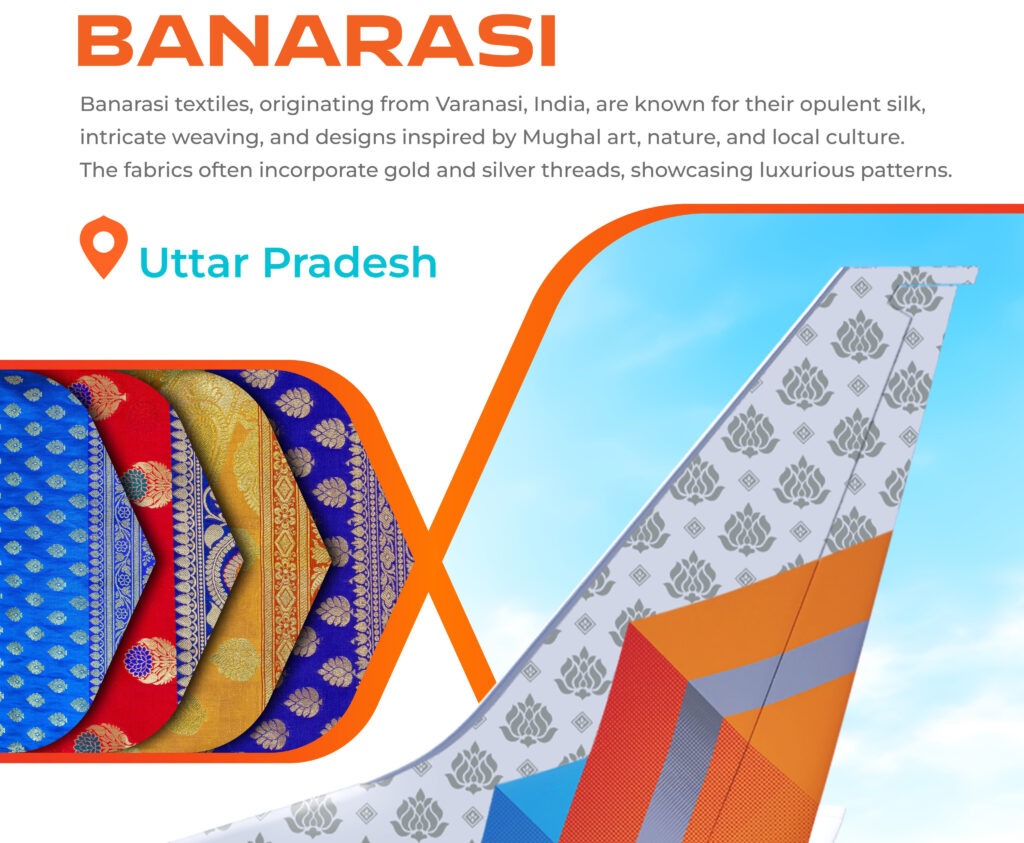
Representing the timeless spiritual city of Varanasi, this fin features the world-renowned Banarasi silk weave. Flourishing historically under imperial patronage, this design is celebrated for its dense brocades, fine gold and silver threads (Zari), and majestic floral motifs woven intricately into luxurious silk bases.
Image Credit: X/@AirIndiaX
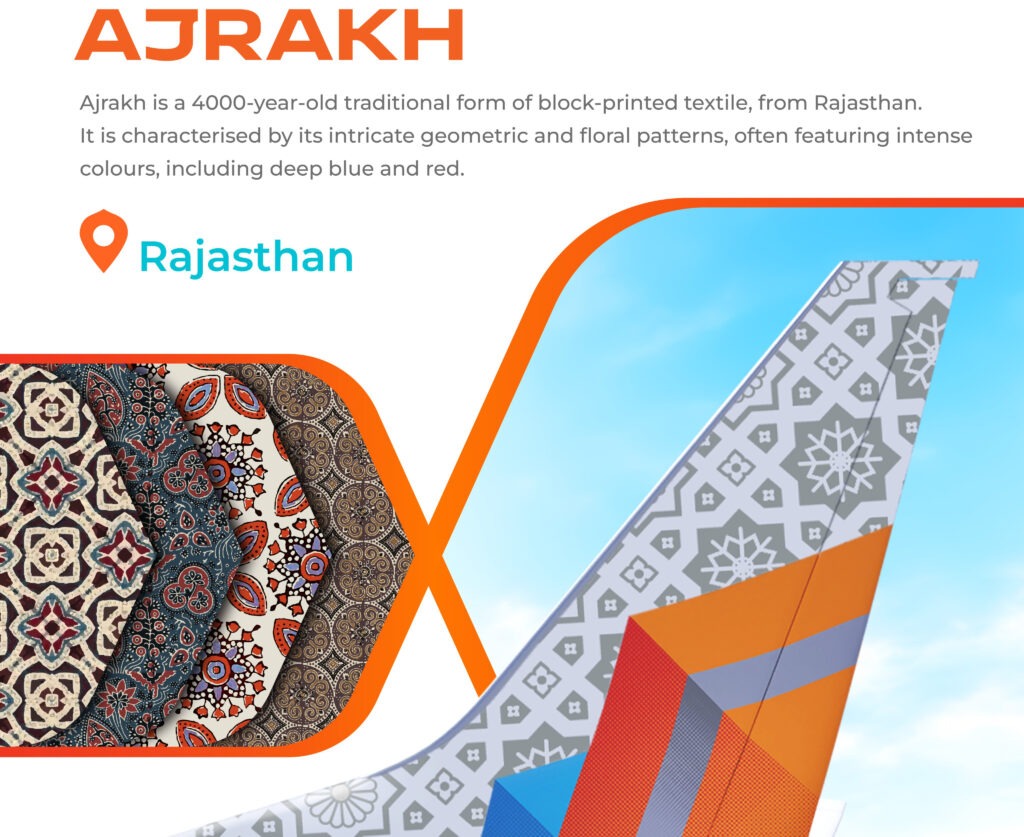
2. Ajrakh – Gujarat & Rajasthan (VT-ATD)
A deep salute to the complex block-printing heritage practiced in the Kutch and Rajasthan belts. Ajrakh is highly recognizable by its intensive resist-dyeing process using natural mineral pigments to stamp intricate, mirrored geometric and abstract star-and-jewel shapes in rich crimsons, deep indigos, and stark blacks.
Image Credit: X/@AirIndiaX
3. Jamdani – West Bengal (VT-BXG)
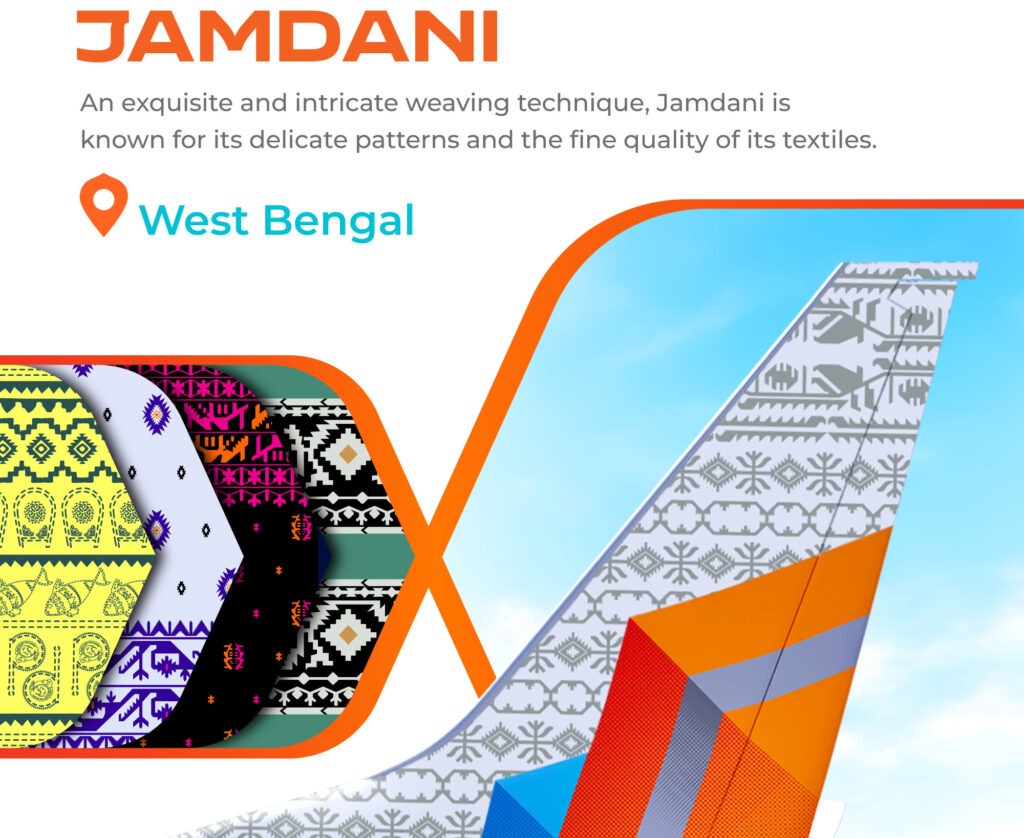
Hailing from the traditional loom houses of Bengal, Jamdani is a masterpiece of fine muslin weaving. Known as a “figured muslin,” it features delicate floral, leaf, and geometric figures floating seamlessly on translucent fabric, created by artisans hand-weaving motifs directly into the loom using supplemental weft techniques.
Image Credit: X/@AirIndiaX
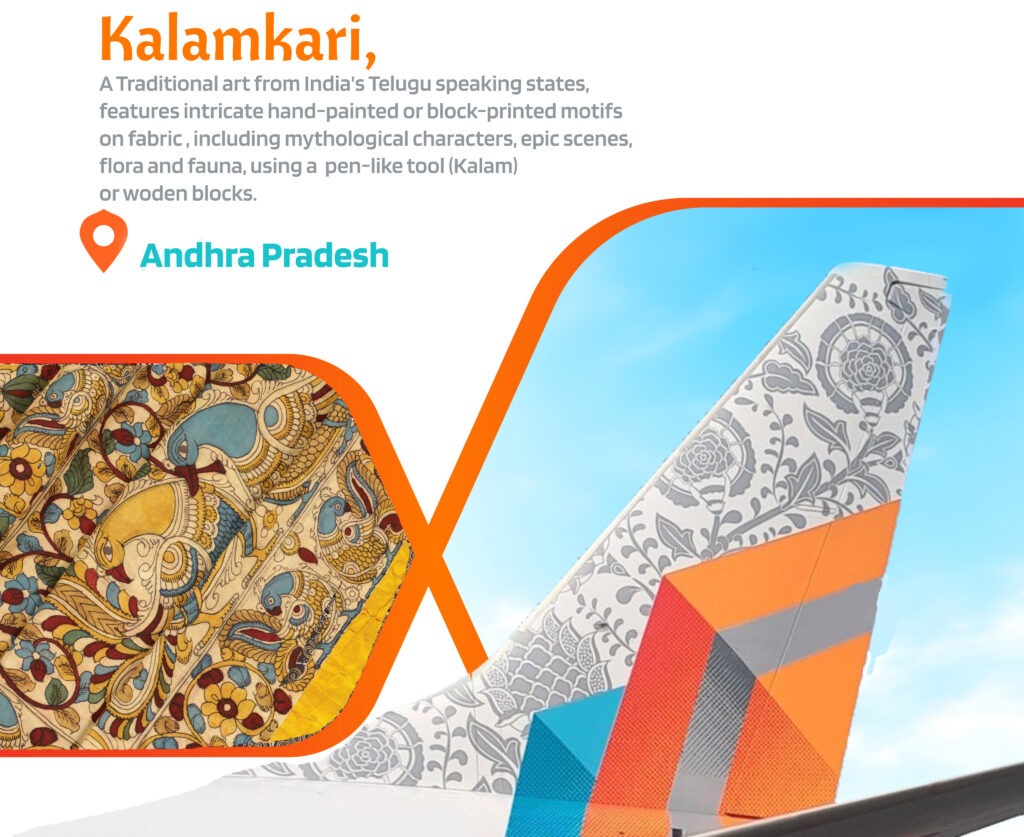
4. Kalamkari – Andhra Pradesh & Telangana (VT-BXH)
Unveiled prominently as a flagship fleet addition at Wings India, this tail honors the ancient art of Kalamkari. Literally meaning “pen-art,” it reflects a multi-stage process where organic cotton fabric is treated and meticulously hand-painted or block-printed with natural vegetable extracts, depicting sweeping depictions of local flora, wildlife, and epic mythological narratives.
5. Bandhani – Gujarat (VT-BXA)
Adorning the milestone inaugural Boeing 737 MAX 8 delivery, this pattern captures the ancestral tie-dye art of Gujarat and Rajasthan. Fabric is tied tightly with threads at thousands of tiny, precise points before submersion in vivid dyes, leaving behind beautiful, rhythmic clusters of dots that symbolize celebration and prosperity.
It was believed that wearing a Bandhani saree can bring good future to a bride. Ajanta walls stand for the evidences of these Bandhani sarees.
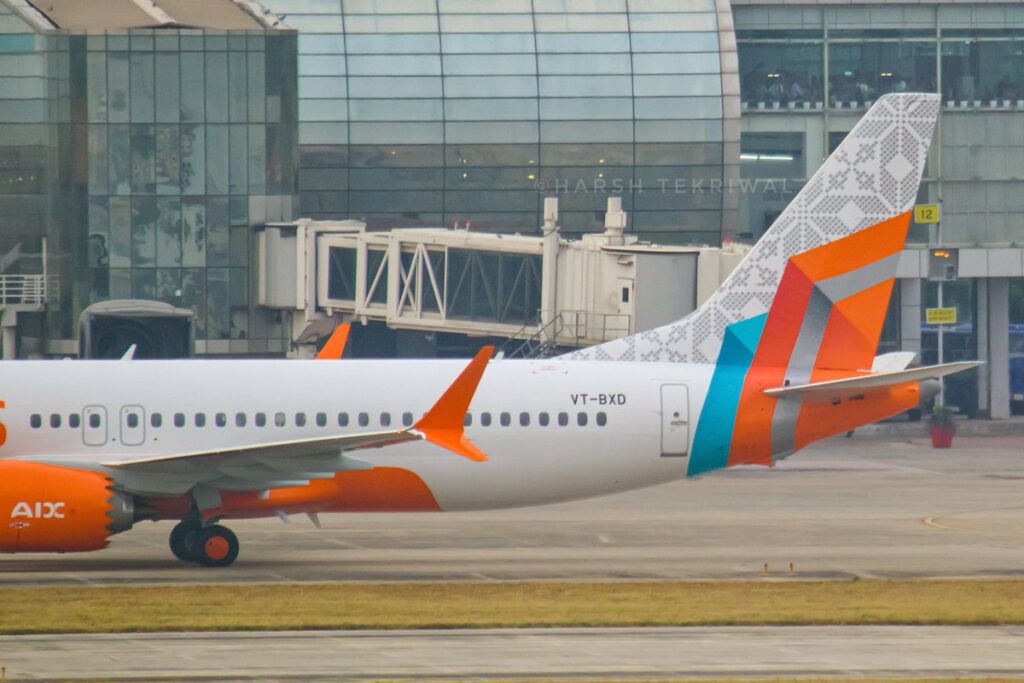
6. Patola – Gujarat (VT-BXD / VT-AYC)
Portraying the absolute apex of silk luxury from Patan, Gujarat, Patola is an incredibly complex double-ikat weave. The warp and weft yarns are dyed separately in precise segments matching a master pattern before hitting the loom, requiring mathematical accuracy so the vivid geometric layouts align flawlessly on both sides of the silk sari.
Patola has had a huge importance as status clothes in Southeast Asia where it was imported from at least the Middle Ages.
#TalesOfIndia
Image Credit: X/@avgeekwithlens
7. Gamosa – Assam (VT-BXI)

Celebrating the cultural soul of Assam, the Gamosa print is an direct representation of the region’s handwoven rectangular white cloths. Framed by striking bright red side borders and accented by meticulous floral or geometric cross-borders, it is a living symbol of hospitality, friendship, and community unity.
#TalesOfIndia
Image Credit: X/@AirIndiaX
8. Kanjeevaram – Tamil Nadu (VT-BXE)
Inspired by the royal weaving traditions of Kanchipuram, this pattern replicates the legendary Kanjeevaram silk structures. The design is celebrated for its thick, premium gold-toned borders accented by traditional temple patterns (Gopurams), geometric checks, and classic wildlife motifs.
Image Credit: X/@AirIndiaX

9. Kasavu – Kerala (VT-BXM)
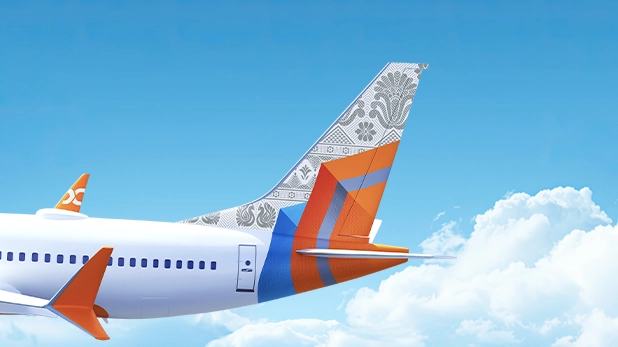
Introduced to mark the grand festivities of Onam in Kochi, this tail brings Kerala’s legendary Kasavu handlooms to life. Defined by its crisp, minimalist off-white or cream cotton canvas baseline, it is elevated by gleaming, highly reflective pure gold borders (Zari) punctuated by traditional peacock, elephant, and classic geometric temple lines.
#TalesOfIndia
Image Credit: X/@AirIndiaX
10. Paithani – Maharashtra (VT-ATJ)
Capturing the sheer elegance of Maharashtra’s royal silk heritage, this design replicates a traditional Paithani sari. It highlights a heavy, shimmering silk foundation paired with a rich metallic pallu adorned with colorful thread motifs—most famously featuring the signature Asavali (squat flower vases) or majestic parrots and peacocks.
Image Credit: X/@AirIndiaX
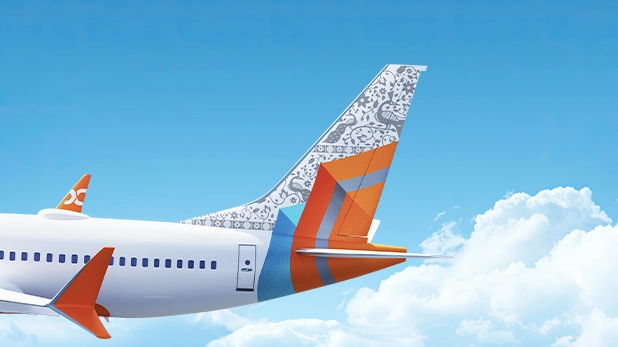
11. Pochampally Ikat – Telangana (VT-BWX)
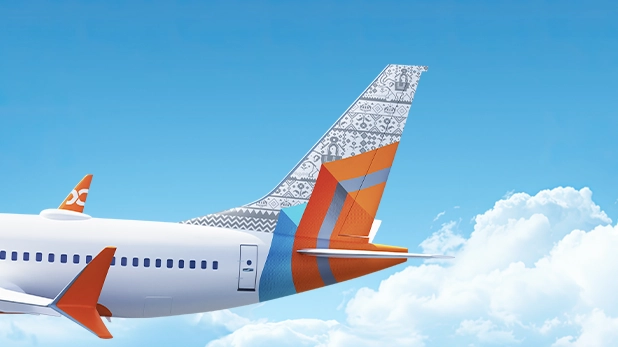
Originating from the famous Bhoodan Pochampally region, this Geographical Indication (GI) tagged print focuses on striking, sharp geometric ikat matrix layouts. Yarns are tightly wrapped and tie-dyed in precise segments prior to weaving, producing a beautifully soft, feathered edge where the complex abstract geometries meet on the loom.
#TalesOfIndia
Image Credit: X/@AirIndiaX
12. Rogan Art – Gujarat (VT-BWQ)
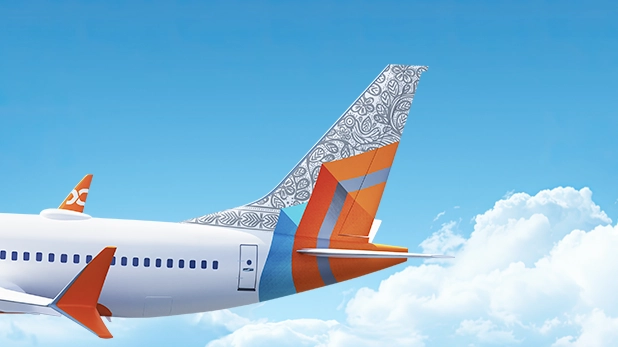
This tail honors the ultra-rare, near-extinct textile craft of Rogan art from Nirona, Kutch. Boiling wild castor oil down into a thick, sticky gel, artisans mix it with mineral pigments to create a dense paste. Using a thin metal stylus, they stretch the paint into fine, fluid threads entirely freehand on fabric, crafting sprawling “Trees of Life” and mirrored floral nets.
#TalesOfIndia
Image Credit: X/@AirIndiaX
13. Bagh Print – Madhya Pradesh (VT-BXQ)
Hailing from the historic Bagh region of Madhya Pradesh, this print is legendary for its block-stamped compositions on hand-woven cotton. It relies on hand-carved teak wood blocks to press rhythmic, symmetrical paisley, abstract grid, and floral configurations over an ivory background using natural vegetable iron and alizarin red-and-black washes.
Image Credit: X/@AirIndiaX
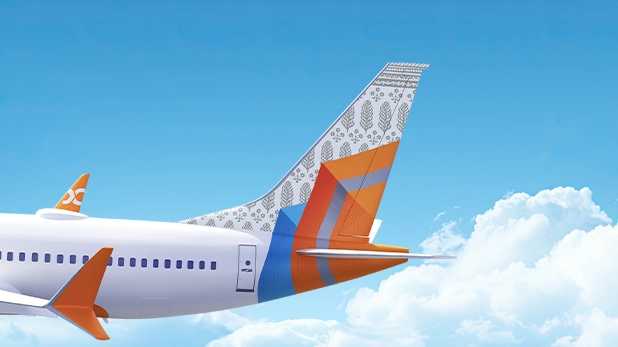
14. Moirang Phee – Manipur (VT-BWW)
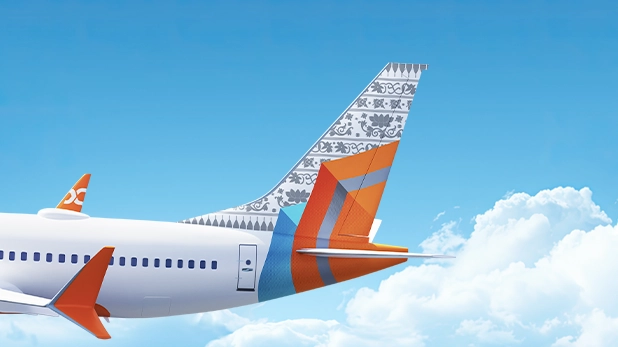
Deeply tied to Meitei mythology and the rulers of ancient Manipur, Moirang Phee is a striking handloom fabric. The defining trait of this design is its border pattern, which displays a sharp, continuous row of triangular shapes called the Yar. This motif mathematically replicates the sharp teeth of Pakhangba, the sacred pythonic deity of Manipuri lore.
#TalesOfIndia
Image Credit: X/@AirIndiaX
15. Shaphee Lanphee – Manipur (VT-BXZ)
A traditional, highly revered black fabric embroidered with specific cosmic and animal motifs. Historically presented by Manipuri kings to warriors and scholars as a supreme token of honor and valor, this pattern carries deep tribal codes and historic symbols directly into the skies.
Image Credit: X/@AirIndiaX
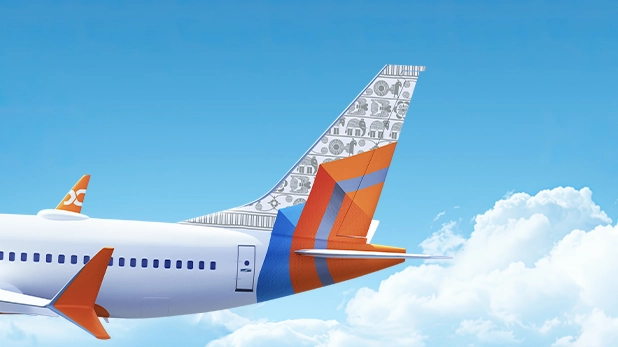
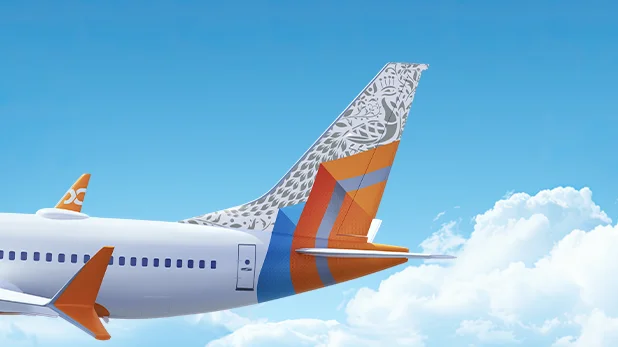
16. Sanjhi – Mathura (VT-BWA)
Emerging from the sacred river towns of Mathura and Vrindavan, Sanjhi represents a centuries-old paper-stencil art form. Master artisans use specialized fine chisels to cut intricate, lace-like lattices entirely freehand from single paper sheets. The tail art captures these delicate stencils, showcasing a rich lattice of peacocks, lotus blooms, winding vines, and temple archways.
Image Credit: X/@AirIndiaX
17. Warli Art – Maharashtra
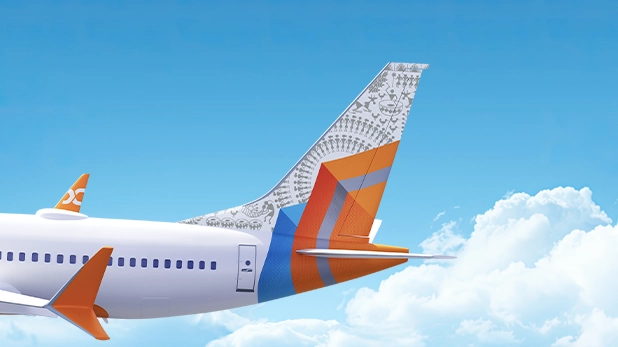
This pattern brings the rich tribal heritage of Maharashtra’s Sahyadri hills to global runways. Using a minimalist, ancient visual alphabet comprised strictly of circles, triangles, and squares, it details energetic social life scenes—including communal circle dancing, hunting expeditions, harvest routines, and profound geometric expressions of nature.
#TalesOfIndia
Image Credit: X/@AirIndiaX
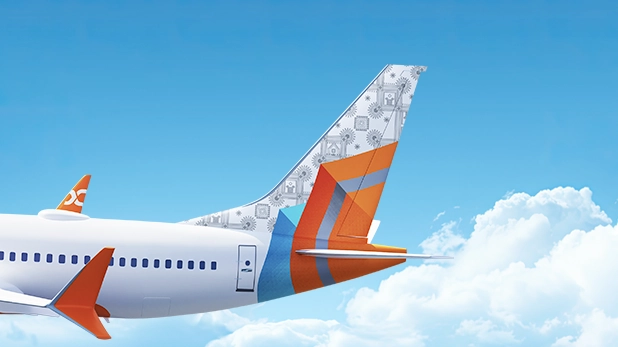
18. Chittara Art – Karnataka (VT-BWI)
Flying proudly on the airline’s milestone 100th aircraft delivery, Chittara is a traditional mural painting historically practiced by the maternal artists of the Deevaru community in rural Karnataka. Painted on mud-coated walls using organic eco-dyes, it utilizes striking, highly dense geometric lines, cross-hatches, and frames to tell symbolic stories of harvest prosperity, marital blessings, and deep spiritual loops.
Image Credit: X/@AirIndiaX
19. Aipan – Uttarakhand
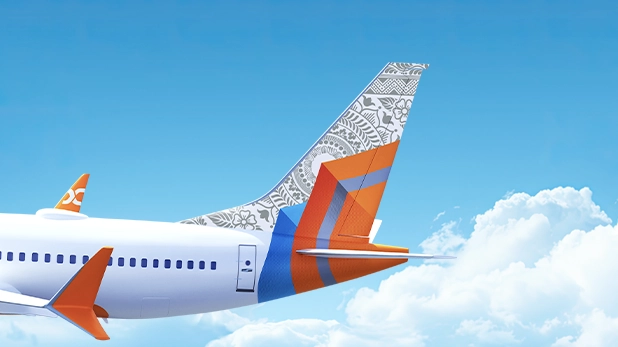
An ancient ritualistic folk art form originating from the Kumaon region of Uttarakhand. It is characterized by its stark, deep ochre-red clay baseline mat (Geru), which is meticulously overlaid with clean, symmetric, and geometric lines hand-drawn with rich white rice paste (Biswar), mapping out celestial lines and protective thresholds.
#TalesOfIndia
Image Credit: X/@AirIndiaX
20. Madhubani / Mithila Painting – Bihar
Hailing from the Mithila region of Bihar, Madhubani is globally renowned for its vivid, line-drawn visual profiles. Created using twigs, matchsticks, and natural plant pigments, it fills every inch of its canvas with intricate lines detailing stylized eyes, local wildlife, fish, and rich regional folklore scenes.
Image Credit: X/@AirIndiaX
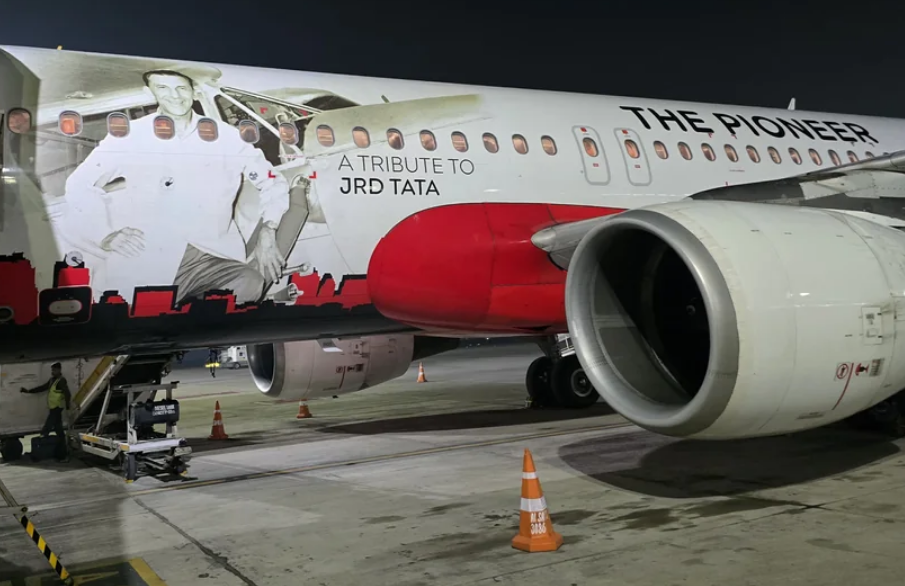
21. “The Pioneer” Livery (VT-JRT)
Operating on an Airbus A320, this iconic full-body livery honors the father of Indian aviation, Sir J.R.D. Tata. It features a large, retro-tinted portrait of J.R.D. Tata alongside a detailed sketch of his historic De Havilland Puss Moth aircraft, celebrating his legendary 1932 solo flight from Karachi to Bombay that birthed commercial civil aviation in India.
Image Credit: X/@AirIndiaX
22. The Ratan Naval Tata Tribute (VT-RNT)
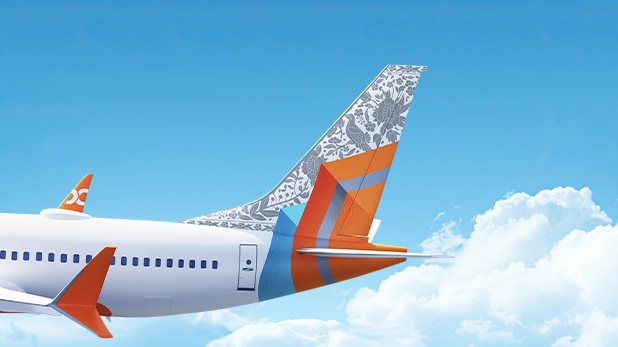
Inducted post-takeover as a special line-fit addition straight from the factory, this specific aircraft and registration code serves as a flying monument dedicated to the legacy, industrial vision, and memory of the late Ratan Tata.
#TalesOfIndia
Image Credit: X/@AirIndiaX
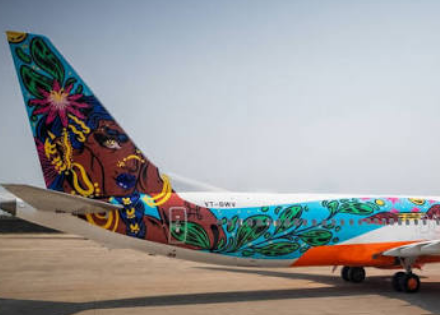
23. “The Flying Canvas” Biennale Livery (VT-BWV)
Breaking completely out of corporate templates, this Boeing 737 MAX 8 was completely transformed into a massive 25-foot flying art piece wrapped in original designs by contemporary artist Osheen Siva. Developed in official partnership with the Kochi-Muziris Biennale, it features vivid, abstract, and colorful graphic motifs that blend futuristic themes with ancient storytelling.
Image Credit: X/@AirIndiaX
In this article we saw Air India Express Tail Design with Arts from Indian States | The Live Time.
Disclaimer: This article is for informational purposes. The Live Time assumes no responsibility or liability for any errors or omissions in the content of this site. The information contained in this site is provided on an “as is” basis with no guarantees of completeness, accuracy, usefulness or timeliness. Images for this article are sourced from various social media platforms. While we try to credit original images, it’s beyond our ability to find real content creators. We are happy to update this article based on genuine reader feedbacks.
Follow The Live Time on Facebook & Twitter.
- What are the ways to get financial freedom?
- 11 Places to visit in Singapore
- Top 10 Unique Airports around the world
- 15 Famous Tourist Places to visit in Israel
How did you like this article, Air India Express Tail Design from Various Indian States? Did you get a chance to board any AIX aircrafts with new tail arts livery? Let us know your experience (good/bad) in the comments below. Please mention if we have missed any tail art in this article.